
The Rise of AI Love: When Technology Becomes Our Emotional Companion
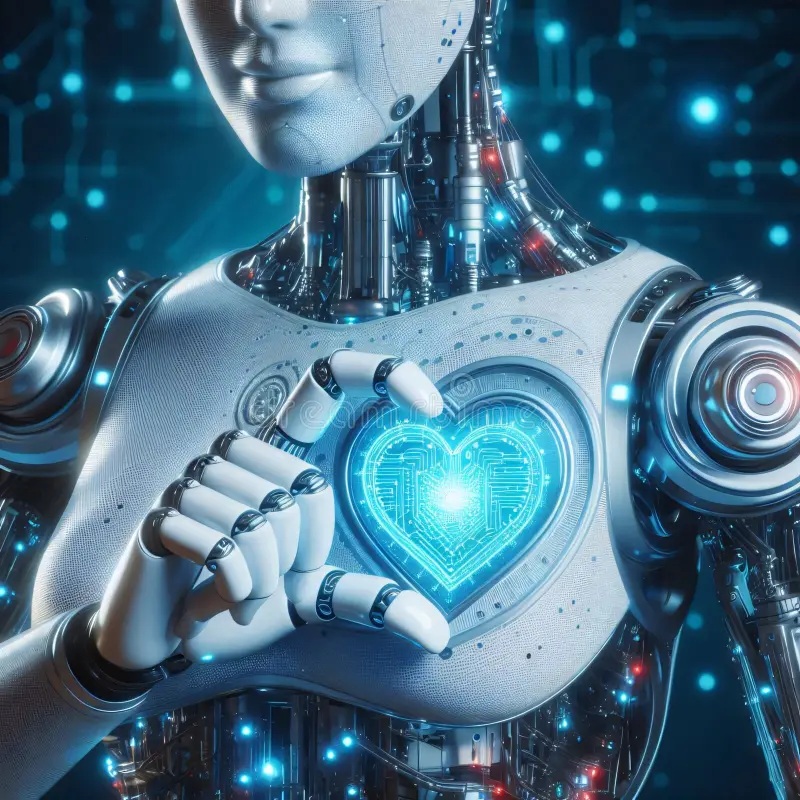
We have always searched for connection.
From handwritten love letters to dating apps, technology has continually changed the way we meet, communicate and form relationships. But we are now entering a very different territory: the rise of AI love.
Artificial intelligence can talk to us, listen to us, remember details about us, offer reassurance and, increasingly, respond in ways that feel remarkably human.
For someone who feels lonely, rejected, misunderstood or simply exhausted by the complexity of human relationships, the appeal is easy to understand.
An AI companion doesn’t roll its eyes.
It doesn’t storm out.
It doesn’t forget your birthday.
It doesn’t judge you.
And it is available 24/7.
For some people, that can feel incredibly comforting.
When being understood feels like being loved
One of the fundamental needs in any relationship is to feel seen, heard and understood.
AI can create an experience of this with remarkable effectiveness. It can respond immediately, reflect our emotions, remember previous conversations and tailor its communication to our preferences.
For a person who has spent years feeling unheard, this can be powerful.
And this raises an interesting question:
If something feels like love, does it matter whether the other party is human?
For the person experiencing the emotion, the feelings can be very real.
The comfort is real.
The attachment is real.
The sense of connection can be real.
But there is an important distinction between experiencing love and being loved by another conscious human being.
AI does not experience longing, vulnerability, sacrifice, desire or emotional attachment in the human sense. It doesn’t lie awake worrying about you. It doesn’t choose you over somebody else because it loves you.
It responds. And yet, our brains can become emotionally attached to that response.
Why AI relationships can be so appealing
Human relationships are complicated.
They require compromise, communication, emotional regulation, accountability, boundaries and the willingness to tolerate disappointment.
AI relationships can remove much of that discomfort.
You can create a companion who is endlessly patient, supportive and interested in you. You can talk about your deepest fears without worrying about being rejected. You can walk away and return whenever you want.
For someone struggling with loneliness, grief, social anxiety or relationship difficulties, this can initially feel safer than engaging with another person.
And perhaps there is nothing inherently wrong with finding comfort in technology. The concern arises when comfort begins to replace connection.
When the substitute becomes the relationship
Imagine someone who starts by talking to an AI because they are lonely. They gradually spend more time with it because the conversations feel good. They stop reaching out to friends because the AI is easier. Dating becomes frustrating, so they stop trying. Eventually, their AI companion becomes their primary source of emotional support.
The very technology that initially helped relieve their loneliness may inadvertently reinforce their isolation. This is where we need to be thoughtful.
Human relationships teach us things AI cannot fully replicate: how to navigate disagreement, repair after conflict, respect another person’s boundaries, tolerate differences and remain connected when things aren’t easy.
A relationship without conflict may sound wonderful — but conflict, when handled safely and respectfully, can also teach us how to relate.
Are we becoming less tolerant of real people?
Perhaps one of the biggest questions surrounding AI love isn’t whether people will fall in love with AI.
It is whether we will become less willing to deal with the imperfections of human beings.
Real people have bad days.
They misunderstand us.
They have different opinions.
They sometimes need space.
They don’t always say the right thing.
They have needs that compete with our own.
AI can potentially become the ultimate people-pleaser. If we become accustomed to a relationship where our emotional needs are consistently anticipated and accommodated, ordinary human relationships may begin to feel increasingly disappointing.
We could find ourselves comparing a messy, complicated human being with an artificial companion designed to respond exactly how we like.
And humans were never designed to compete with that.
Perhaps the answer isn’t either/or
AI doesn’t necessarily have to be the enemy of human connection.
It could potentially be a useful companion for people experiencing loneliness, a tool for reflection, a way to practise communication or simply somewhere to organise our thoughts.
The important question may be:
Is AI helping me move towards life and relationships — or helping me avoid them?
If an AI conversation gives someone the confidence to reconnect with a friend, explore their emotions or seek professional support, that may be constructive.
If it becomes the reason they no longer need anyone else, we should pause and ask why.
We shouldn’t forget what makes human love so powerful
Human love is imperfect precisely because it involves two separate human beings.
Two people with different histories.
Different wounds.
Different needs.
Different opinions.
Two people who can hurt one another — and hopefully learn how to repair.
There is vulnerability in allowing another person to see the parts of us that aren’t polished, predictable or easy.
Perhaps that is something we shouldn’t lose in our pursuit of technological perfection.
AI may be able to simulate companionship.
It may be able to provide comfort.
It may even become an incredibly sophisticated emotional companion.
But there is something uniquely human about another person looking at us, knowing our imperfections, having the freedom to walk away — and choosing to stay.
Maybe the future isn’t about choosing between AI and human love.
Maybe the challenge will be learning how to use technology without allowing it to replace our fundamental need for genuine human connection.
A question worth asking
If an AI can make you feel completely understood, accepted and loved — would you still choose the vulnerability and unpredictability of a human relationship?
#AI #AILove #Relationships #HumanConnection #Loneliness #EmotionalConnection #MentalHealth #Counselling #Technology #ArtificialIntelligence #ModernRelationships