
Death Removes the Person, But It Doesn’t Eliminate the Relationship
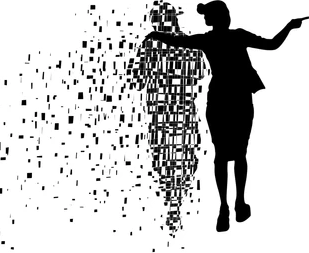
Death removes the person from our physical world, but it doesn’t necessarily remove the relationship we have with them.
When someone we love dies, there is often an expectation that, over time, that we will somehow “let go” of them. We may hear that we need to move on, find closure or accept that they are gone. While accepting the reality of the death is an important part of grieving, the idea that we need to leave the relationship behind can be much more complicated. Sometimes more complicated that we could ever image.
Relationships don’t simply exist in the physical presence of another person. They exist in our memories, our stories, our experiences, our values and the ways that person has influenced who we have become. They can be everywhere we look, they can be in sounds, songs, smells, they can seem to take up so much of our space both psychical and emotional, that it can sometimes feel overwhelming.
The relationship can continue, even when the person cannot
Grief research has increasingly recognised what is known as continuing bonds. Rather than viewing healthy grieving as requiring a person to sever their emotional connection with the person who has passed, continuing bonds acknowledges that people may maintain an ongoing relationship with someone who has died.
That relationship may change, but it doesn’t necessarily end or finish.
A person might still talk to their mother when they need advice. They might cook a meal using their father’s recipe. They might hear a particular song and immediately think of their partner. They might continue traditions that were important to their family. They may still stroke a favourite blanket of a much-loved pet. They may look at photographs, visit a favourite place, wear something that belonged to the person or tell stories about them to their children.
Some people even continue an internal or external conversation with them.
“Dad would have loved this.”
“Mum would know what to do.”
“She would be laughing at this.”
“He would have loved chasing that ball.”
These experiences don’t necessarily mean that someone is unable to accept the death. They can simply represent the continuation of a relationship that has changed.
Research into continuing bonds suggests that these connections can provide comfort, meaning and a sense of relational identity, although the experience is different for every person and can sometimes also be associated with distress.
We don’t just lose a person
- When someone dies, we don’t only lose the person
- We can lose the future we imagined with them
- We lose the conversations that will never happen
- The celebrations they won’t attend
- The advice we won’t receive
- The ordinary moments we may have taken for granted
- The comfort and companionship they gave us
Sometimes, we even lose a part of ourselves because our relationship with that person helped shape our identity. I believe when someone we love dies, they take a part of us with them, which can never be replaced. We can grow a new piece, yet it’s not the same.
A wife doesn’t simply lose her husband. She may also lose the person who knew her history, her humour, her fears and the small details of everyday life.
A son may lose not only his father but also the person he called when he needed reassurance.
A friend may lose the person who knew them before they became the person, that they are today.
A person may lose their pet, the only person who very listened to them without judgement or criticism. That pet may have been the only person they spoke to on a weekend.
This is why grief can feel so much bigger than the absence of another person.
“Moving on” doesn’t have to mean moving away
Perhaps we need to rethink the language we use around grief. “Moving on” can sometimes sound as though the goal is to leave the person behind.
But perhaps moving forward while carrying the relationship with us is a more compassionate way of understanding grief.
- The relationship may become internal rather than physical
- We may no longer be able to sit beside the person, but we can still carry their words, their comfort
- We may no longer be able to call them, but we can still remember what they would have said
- We may no longer be able to create new experiences together, but the experiences we shared can continue to influence our lives
- The relationship has changed – It hasn’t necessarily ended
Grief is not the same for everyone
There is no single way to maintain a connection with someone who has died.
For one person, talking about the deceased may be comforting. For another, it may feel too painful.
One person may want photographs everywhere. Another may need to put them away for a while.
Some people find comfort in visiting a grave. Others don’t.
Some people continue religious or spiritual practices. Others find meaning through memories, family traditions, music, objects or stories.
Another person my go to a medium or clairvoyant, to find a connection.
Culture, spirituality, the nature of the relationship and the circumstances of the death can all influence how continuing bonds are experienced.
There is no one way to “keep” someone in our lives after death.
What matters is whether the relationship, in its new form, can become part of a person’s life rather than preventing them from living it.
Sometimes the relationship is complicated
Continuing bonds don’t have to be entirely positive either. Relationships can be complicated:-
- We can love someone who hurt us
- We can miss someone yet still feel angry with them
- We can experience relief alongside sadness
- We can wish we had said something differently or said more, expected our love for them
- Death doesn’t magically resolve everything that existed within a relationship
- For some people, grieving involves finding a way to live with unanswered questions, unfinished conversations or conflicting emotions
- There may never be perfect closure
- And perhaps closure isn’t always necessary
Sometimes the work of grief is less about finding an ending and more about finding a way to live with what happened.
The person becomes part of our story
Every significant relationship changes us.
People leave fingerprints on our lives through the things they teach us, the memories they create and the ways they influence how we see ourselves and the world.
After death, those influences can remain.
- A person’s mannerisms may appear in their children
- Their favourite saying may become part of family language
- Their values may influence decisions for years to come
- Their stories may be told to grandchildren who never had the opportunity to meet them
In this way, the person can continue to have a presence in the lives of those who loved them.
Not physically – But relationally.
As counsellors, perhaps we don’t need to help people “let go”
One of the most important questions in grief counselling may not be:
“How do we help this person let go?”
It may instead be:
- How can this person develop a healthy relationship with the person who has died while continuing to live their own life?
- How can we support our client to find a way to take them forward with them, what sort of ritual can we suggest for them?
- How can we support them to create space for grief without making the relationship itself the problem?
- How can we normalise what they are feeling?
It allows someone to say:
- “I still miss them.”
- “I still talk about them.”
- “I still talk to them.”
- “I still wish they were here.”
- “And I am also learning how to live without them physically here.”
- “I still cry every day.”
These statements can exist together.
Grief doesn’t necessarily require us to choose between remembering someone and moving forward.
Perhaps healing can involve learning that we can do both.
Death changes relationships. It doesn’t necessarily erase them.
Eventually, the intensity of grief may change.
The tears may come less often.
The memories may become less painful.
There may be laughter when remembering something that once brought only sadness.
But that doesn’t mean the person has been forgotten. It may simply mean that the relationship has found a different place within us, within our lives.
- Death removes the person from our physical world
- It doesn’t remove the years shared
- It doesn’t erase the love
- It doesn’t undo the influence they had on us
- And it doesn’t necessarily eliminate the relationship
Sometimes grief is not about learning how to stop loving someone who has died. Sometimes it’s about learning how to carry that love into a life they are no longer physically part of.
A question to reflect on
If death changes a relationship rather than completely ending it, what might it look like to find a meaningful place for that relationship in the life you continue to live? Death also changes us.
Remember grief is the tax of love
References
Hewson, H., Galbraith, N., Jones, C., & Heath, G. (2024). The impact of continuing bonds following bereavement: A systematic review. Death Studies, 48(10), 1001–1014.
Stroebe, M., Schut, H., & Boerner, K. (2010). Continuing bonds in adaptation to bereavement: Toward theoretical integration. Clinical Psychology Review, 30(2), 259–268.
Selvili, Z. Z., & Klass, D. (2026). Continuing bonds or ongoing attachments? Exploring the distinction. Death Studies, 50(5), 793–805.
Toni Langford Counselling – Relationship Counselling Sutherland Shire – TLC – Toni Langford Counselling