
How Not to Take Things Personally
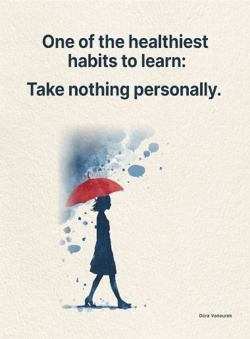
One of the biggest misconceptions is that people who take things personally are “too sensitive.” In reality, taking things personally is often a learned protective response, a learned behaviour. If you’ve grown up with criticism, rejection, unpredictability or emotional neglect, your brain naturally becomes hypervigilant for signs that you are being judged or abandoned or both. The good news is that this response can be changed.
Here are some practical coping skills that counsellors often teach clients.
1. Pause Before You Personalise
When someone says or does something that upsets you, resist the urge to immediately assign meaning to it. Instead ask yourself:
What actually happened?
What story am I telling myself about what happened?
Are those two things the same?
For example:
Fact: My boss didn’t reply to my email.
Story: She’s disappointed in me. I’ve done something wrong.
Often our minds fill in the blanks with our greatest fears rather than the most likely explanation.
2. Use the “Maybe…” Technique
Instead of assuming the worst, deliberately create alternative explanations. Instead of:
“They ignored me because they don’t like me.”
Try:
Maybe they’re busy.
Maybe they’re distracted.
Maybe they’re having a difficult day.
Maybe they’ve forgotten.
Maybe it has absolutely nothing to do with me.
The goal isn’t to convince yourself you’re right—it’s to remind yourself there are many possible explanations.
3. Separate Feedback from Identity
Many people hear:
“You made a mistake.”
As:
“I am a mistake.”
Those are very different statements.
Practice changing your internal language.
Instead of:
“I failed.”
Say:
“One thing I did didn’t work.”
You are not your behaviour.
You are not your mistakes.
4. Ask Yourself:
“Is this about me—or is this about them?”
People communicate through their own experiences.
Someone who is stressed often sounds abrupt.
Someone who is anxious may seem distant.
Someone who is hurting may become critical.
Their behaviour tells you far more about their emotional state than your worth.
5. Look for Evidence
Our brains are excellent at finding evidence that supports our fears.
Challenge yourself. Ask:
What evidence supports my assumption?
What evidence doesn’t?
If my best friend told me this story, what would I say to them?
This activates the logical part of your brain instead of the emotional alarm system.
6. Practice Emotional Labelling
Research shows simply naming an emotion reduces its intensity. Instead of saying:
“I’m upset.”
Become more specific.
“I feel rejected.”
“I feel embarrassed.”
“I feel criticised.”
“I feel disappointed.”
Naming emotions helps calm the brain.
7. Delay Your Reaction
When emotions are high, don’t respond immediately. Try the 24-hour rule.
Don’t send the email.
Don’t fire off the text.
Don’t resign.
Don’t end the friendship.
Time gives perspective.
8. Remember the Spotlight Effect
Psychologists call this the Spotlight Effect. We tend to believe everyone is paying far more attention to us than they actually are. The reality? Most people are worrying about themselves. Not us.
9. Create Emotional Distance
Instead of thinking:
“They’re attacking me.”
Try saying:
“I’m noticing that I’m having the thought they’re attacking me.”
That tiny change creates distance between you and the thought.
You become the observer rather than the emotion.
10. Strengthen Your Internal Validation
People who rely heavily on external approval are more likely to take things personally. Begin asking yourself:
What do I think?
Am I proud of how I handled that?
Did I act according to my values?
The more validation comes from within, the less power other people’s opinions hold.
11. Check for Old Wounds
Sometimes today’s hurt is really yesterday’s wound being reopened. Ask yourself:
“How old do I feel right now?”
If the answer feels much younger than your actual age, or psychically smaller than your actually are, your emotional response may be connected to earlier experiences rather than the current situation.
Recognising this can be incredibly freeing.
12. Use the Three-Question Reset
Whenever you’re upset, ask:
Will this matter in a week?
Will this matter in a year?
Will I even remember this in five years?
Many situations shrink dramatically when viewed through a wider lens.
13. Build Self-Compassion
Speak to yourself as you would a close friend. Instead of:
“I’m so stupid.”
Try:
“That was hard, and anyone in my position might have felt hurt.”
Self-compassion isn’t making excuses. It’s treating yourself with the same kindness you readily offer others.
14. Practise Healthy Curiosity
Rather than assuming someone’s intention, become curious. You might say:
“When you said that, I wasn’t sure what you meant. Could you clarify?”
Many misunderstandings disappear once we ask rather than assume.
15. Remember This Simple Formula
A helpful reminder is: Event + Interpretation = Emotional Response
We often think:
Event = Emotion
However, it’s usually our interpretation of the event that creates the emotional reaction. When we learn to question our interpretations, we gain more choice in how we respond.
A Daily Mantra
When you notice yourself taking something personally, pause and remind yourself:
Not everything is about me.
Other people’s behaviour reflects their experiences, not my worth.
I can be curious before I become certain.
My value doesn’t change because someone else is having a bad day.
I am enough, even when someone disagrees with me.
Final Thoughts
Learning not to take things personally isn’t about becoming indifferent or emotionally detached. It’s about developing emotional resilience—the ability to recognise that another person’s words, moods, or opinions do not define your value.
With practice, you’ll find yourself responding rather than reacting, becoming less triggered and burdened by assumptions, and more grounded in your own sense of self-worth. This shift doesn’t happen overnight, however every time you pause, question your assumptions, and choose self-compassion over self-criticism, you’re strengthening a healthier, more resilient way of relating to yourself and others.
References
Brené Brown (2010) – The Gifts of Imperfection – Brené Brown
Kristin Neff (2011) – Self‐Compassion, Self‐Esteem, and Well‐Being – Neff – 2011 – Social and Personality Psychology Compass – Wiley Online Library
Susan David (2016) – Emotional Agility Book [Get a Free Chapter Here]
Daniel Kahneman (2011) – Thinking Fast and Slow | Daniel Kahneman
Jon Kabat-Zinn (1994) – 📘 Wherever You Go, There You Are — Full Audiobook | Jon Kabat-Zinn | Mindfulness Meditation
Relationship Counselling Sutherland Shire – TLC – Toni Langford Counselling
These strategies work best when practised consistently. Like building physical strength, emotional resilience grows through repeated, intentional use of small skills over time.