
Using Ourselves as Counsellors: Helping Clients Come to Terms with Death
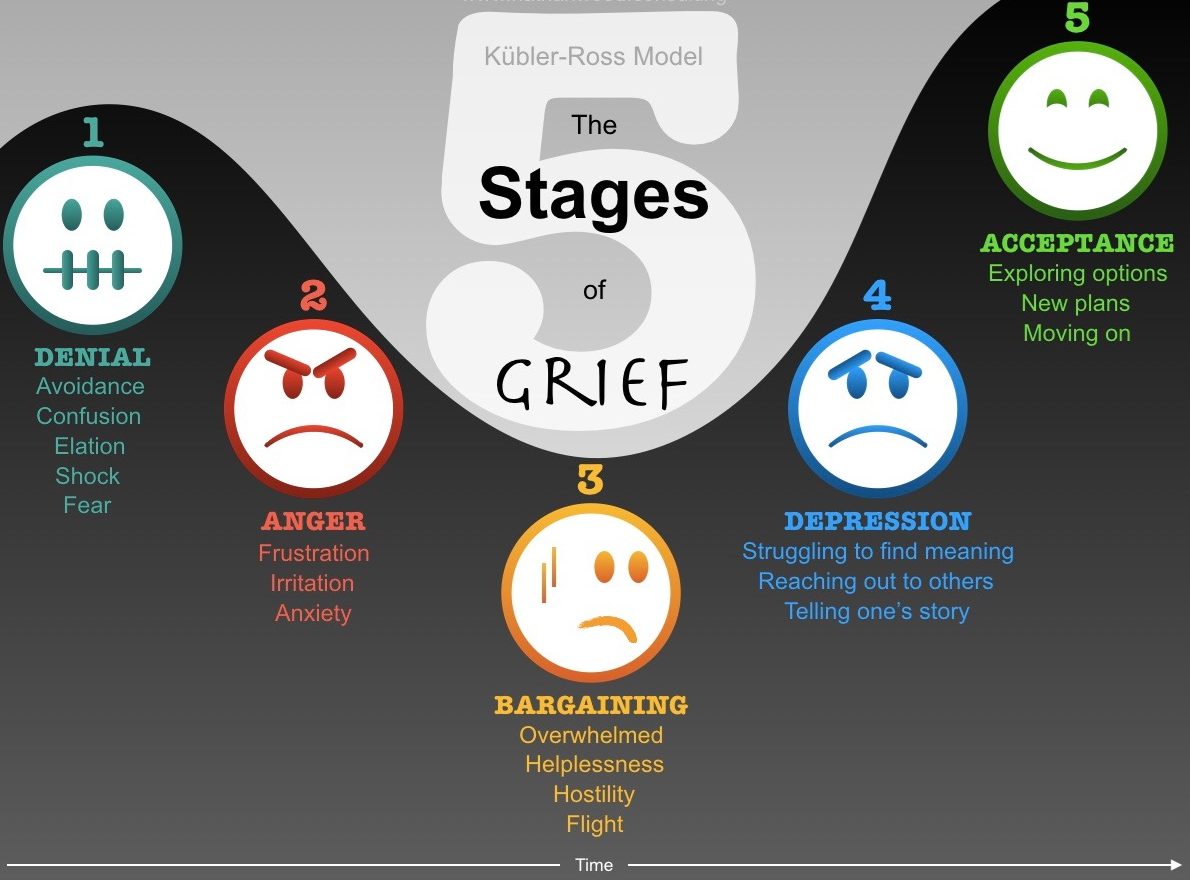
Death is something every one of us will experience, yet we often struggle to talk about it until it happens to someone we love.
As counsellors, we can play an important role in helping clients talk about death, grief and loss in a way that feels safe, human and real.
Unfortunately, if we don’t acknowledge and do the work to move through the grief, we can be in a place of stuck or compounded grief.
Sometimes the most valuable tool we have isn’t another counselling technique.
It is ourselves.
- Our ability to sit with their sadness
- Our willingness to hear difficult stories
- Our comfort with silence
- Our capacity to acknowledge and normalise that death is painful without trying to immediately make it better
And sometimes, when appropriate, our willingness to let a client see a little of our own humanity.
We don’t have to be afraid of death in the counselling room
When someone has died, our clients can arrive carrying much more than grief.
They may carry
- Fear
- Guilt
- Anger
- Relief
- Regret
- Unfinished conversations
- Questions about what happens after death
- Fear of our own mortality
- Discomfort because they don’t know how they are “supposed” to feel
Grief is not one emotional experience. It can involve yearning, distress, confusion, regret and apprehension about the future, and people can respond to bereavement very differently.
Our role isn’t necessarily to remove these feelings. Sometimes it is simply to make room and space for them to mourn and hopefully, eventually start to find a way forward, without them physically present in their lives.
Our presence can teach a client that grief is survivable
Clients often watch us as much as they listen to us.
If we become uncomfortable when they cry, quickly change the subject or rush to reassure them, the unspoken message may be:
“This is too much or I’m not interested”
But if we can remain present, grounded and emotionally available, we communicate something very different:
“You can talk about this here.”
“You don’t have to protect me from your grief.”
“We can sit with this together.”
“You are safe here.”
The therapeutic relationship itself can therefore become part of the work.
Research consistently identifies the therapeutic relationship as an important part of psychological treatment outcomes, while empathy, genuineness and responsiveness are important pieces of effective therapeutic relationships.
Sometimes silence is more helpful than words
There can be a temptation, particularly for newer counsellors, to feel that we need to say something profound when a client is crying.
We don’t.
Sometimes:
“I’m here.”
Can be enough.
Sometimes sitting quietly with someone’s pain is more therapeutic than trying to find the perfect sentence. Most clients don’t have this in their lives, most of the people they relying will try to ‘fix’ who their feeling, not just to allow them to feel what they feel.
We can allow the client to cry without immediately handing them a tissue, asking another question or attempting to redirect the conversation.
Silence can communicate:
“There is nothing you need to do with this feeling right now.”
We can use our own humanity without making the session about us
This is where counsellor self-disclosure requires thoughtfulness.
A client might say:
“You’ve probably never experienced anything like this.”
A counsellor who has experienced bereavement might be tempted to respond:
“Actually, I lost my mother too.”
That may be helpful in some circumstances.
However, sometimes it may not be.
The important question isn’t simply “Have I experienced something similar?”
It is:
“Would sharing this information serve the client, or is it about me?”
Research on therapist self-disclosure suggests it can sometimes strengthen the therapeutic relationship, increase a sense of shared humanity and support client openness. However, the impact depends on factors such as timing, content and motivation, and disclosure can become unhelpful if the focus shifts from the client to the therapist.
A simple internal check can therefore be useful:
Is this for the client, or is it for me?
If we are disclosing because we feel uncomfortable with their distress, want to reassure them, want them to know we understand, or need to share our own story, it may be worth pausing.
If a brief, carefully considered disclosure genuinely helps the client feel less alone, it may have a place.
Our own experience of loss can be a resource — and a blind spot
Many counsellors have experienced death themselves.
That experience can increase our empathy.
however it can also influence what we expect grief to look like.
We might think:
“I know exactly how you feel.”
But we don’t. This is their story, not ours.
Even when we have lost someone in remarkably similar circumstances, their relationship was not our relationship.
Their grief is not our grief.
Their culture, beliefs, family, history and relationship with the deceased are unique to them.
Our experience can help us understand something about grief.
It cannot tell us what this particular client is experiencing.
This distinction is particularly important when working with complicated relationships.
A client might say:
“I miss him, but I’m also relieved he’s gone.”
Or:
“I loved her, but our relationship was difficult.”
Or:
“Everyone keeps telling me how wonderful he was, but they didn’t know what he was like at home.”
We need to be able to sit with the complexity.
Grief doesn’t require us to turn the deceased person into a perfect person.
We can normalise without minimising
There is an important difference between normalising grief and telling someone that what they are experiencing is normal and therefore they should simply accept it.
Normalising might sound like:
“Many people experience moments where they feel completely overwhelmed by grief.”
Or:
“It makes sense that you’re experiencing conflicting emotions when this relationship was complicated.”
Or:
“There isn’t one correct way to grieve.”
Normalising can reduce the additional distress that comes from believing:
“There must be something wrong with me because I’m still feeling this way.”
But we also need to remain alert to situations where grief becomes particularly complex, prolonged, disabling or associated with significant risk. Normal bereavement does not automatically mean that clinical intervention is required, but some people do need more specialised support. In NSW, for example, government guidance recognises grief counsellors, psychologists, psychiatrists and support groups as potential sources of grief support. I have listed some resources below.
We can help clients discover that the relationship doesn’t necessarily end
One of the most powerful things we can do is help clients explore what their relationship with the person who died, means now.
The person may be gone physically, but the relationship may continue through memories, values, traditions, stories and the ways they have influenced the client’s life.
We might ask:
“What do you think you will always carry with you from that relationship?”
“What did they teach you?”
“What do you miss most?”
“What would you like to remember?”
“What parts of them do you see in yourself?”
This moves grief away from the idea that the client needs to “let go” and towards the possibility of finding a new way of relating to the person who has died.
We can model that talking about death is possible
Perhaps one of the greatest gifts we can offer is our willingness to not run away from the subject.
- Death can be uncomfortable
- It can make us think about our own mortality
- It can bring up our own losses
- It can activate fear, sadness or memories we thought we had dealt with
That is why counsellor self-awareness matters.
If our own grief is activated in a session, we need to recognise it rather than allowing the client to unknowingly carry it for us.
Our feelings belong to us, not our client.
The client’s feelings belong to them, not us.
Supervision, reflection and professional support can help us understand what belongs to the client, what belongs to us, and where those experiences may intersect.
Sometimes our most powerful intervention is simply being human
Counselling can involve theories, frameworks, techniques, assessments and interventions.
But when someone is sitting in front of us saying:
“I can’t believe they’re gone.”
Sometimes the most therapeutic response isn’t a technique,
- It’s about being presence
- It’s about showing compassion
- It’s being willing to sit with someone in one of life’s most painful experiences without trying to rush them through it
Being genuine and appropriate can contribute to the therapeutic connection, but self-disclosure needs to remain purposeful and carefully considered.
We don’t need to have all the answers, because we don’t have the answers that will ‘fix’ them.
We don’t need to take the grief away, that’s their job, if it can be taken away at all.
And we certainly don’t need to make death less painful, because we can’t.
Perhaps our role is to help clients discover that they can talk about it, feel it, remember, question, cry, laugh, and eventually find a way to continue living alongside the loss.
Because coming to terms with death doesn’t necessarily mean being okay with it.
It can simply mean reaching a place where:
“They are gone”
and
“They are still part of my life in some way”
Both can be true at the same time.
And sometimes, as counsellors, the most powerful thing we can use is not another technique.
It is ourselves and the safe space we provide our clients to just be who they are at any given time or moment.
A question for counsellors to reflect on
When a client brings death and grief into the counselling room, what happens inside you — and how might your own response influence the space you create for their grief?
References
Hewson, H., et al. (2025). Therapists’ self-disclosure with bereaved patients: A qualitative exploration. Counselling and Psychotherapy Research.
Australian Institute of Family Studies. Family grief therapy.
NSW Government. Grief support.
Training.gov.au. CHCFCS004 – Provide grief and loss counselling
Toni Langford Counselling – Relationship Counselling Sutherland Shire – TLC – Toni Langford Counselling